Included below are two infographics I have made to raise awareness about the homeless population in England. I have also created a flyer to promote the “Sleep Out” event held by Sleeping Safely.
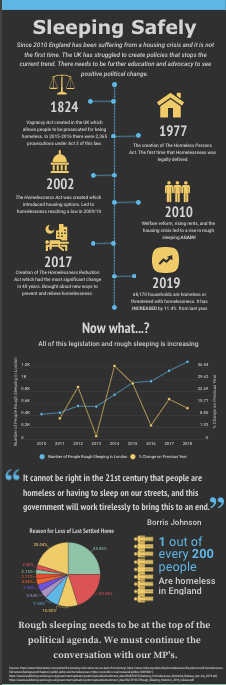

Included below are two infographics I have made to raise awareness about the homeless population in England. I have also created a flyer to promote the “Sleep Out” event held by Sleeping Safely.
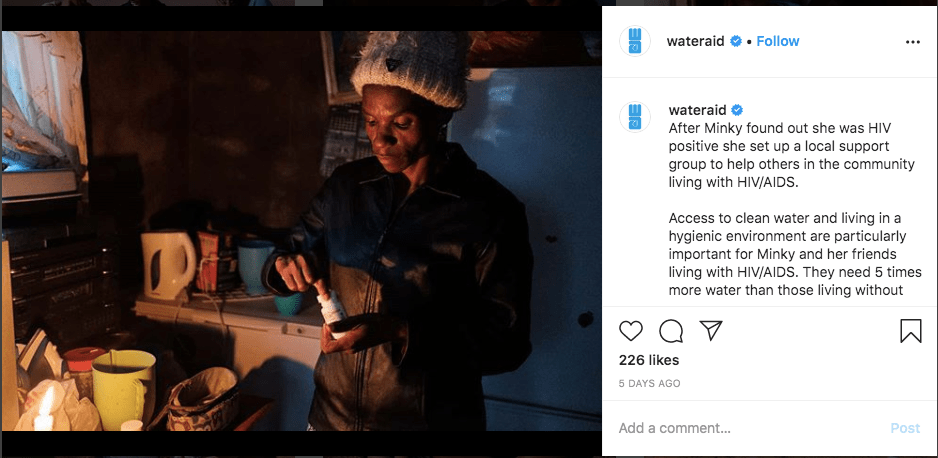
Minky is a ADD AGE woman from Swaziland who was diagnosed with HIV a few years ago. WaterAid has been following her journey and updating their followers on their Instagram. Minky is an example of how, even with access to the proper medicine for her disease, she still suffers because she does not have clean water to drink or means to adequate hygiene and sanitation. As a result she is constantly sick.
The below post is one of three that WaterAid posted in a row about Minky. WaterAid commonly shares the stories of individuals who are struggling on their Instagram so their followers can understand exactly what is needed. Getting to know the people WaterAid aims to help and building a relationship with them through social media allows a deeper connection to grow between the WaterAid supporters and those WaterAid assists. It is a great tactic to connect followers to WaterAids efforts through such individual stories. It is through these personal stories that followers will be inspired get involved. These posts are also educational and raise awareness, teaching people all around the world what it is like to live in these communities.
WaterAid ends the caption by explaining what they are doing to help people like Minky. This is also where they ask their followers to get involved. By writing this at the end of the post shows followers that WaterAid’s first goal is to raise awareness and to help those afflicted. WaterAid is leading with an example of what they use funding for and then they ask followers for financial support.
Lastly, the photo that accompanies this post was a good choice because not only does it fit well with the style of their Instagram page it also brings the caption to life. Here we see Minky preparing her daily medications. This enhances the connection WaterAids followers makes with Minky.
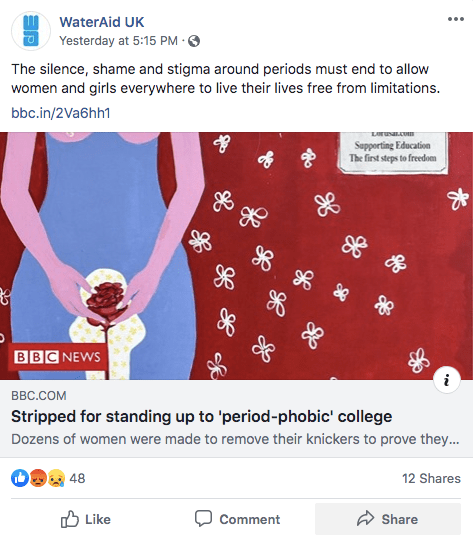
This post is from WaterAid’s Facebook page. As with all Facebook pages posts are listed chronologically with the most recent being first. To the left are tabs to more information such as fundraising, and upcoming events. To the right is contact information and a link to their website. The layout will be familiar and easy to navigate to the average Facebook user.
This post is about the difficulties women face when they have their periods living in underdeveloped communities without clean water or flushing toilets. The article attached to the post is from the BBC, however this is a topic WaterAid covers extensively on their Youtube channel.
The caption they use with this post is short and to the point while also providing just enough insight into what the article is about. This is great content to add to their Facebook page because it is there purely to be educational. Education and awareness is an important aspect of the organization and key to growing its foundation. This element however, can sometimes get lost in their feed when asking for donations or promoting events. Sharing posts like this regularly will ensure WaterAids message remains on the forefront.
WaterAid should have considered attaching a link to their Youtube playlist on this topic, allowing those interested to research more.
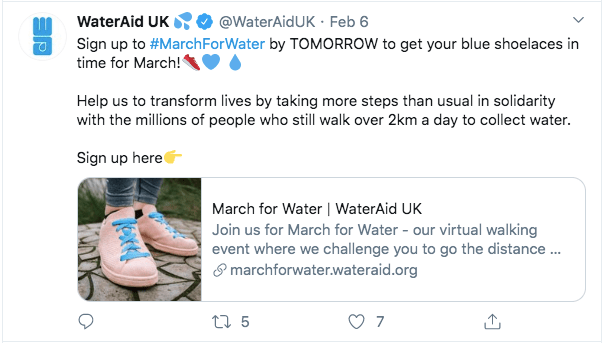
This post is from WaterAid’s Twitter page. It is promoting a month long event they have in March. People can sign up through the link in the post to participate in their virtual walking event to raise awareness about how much some people must walk everyday just to get water.
They started promoting the event a month in advance offering special gifts to those who signed-up early. This is an effective tactic to create a base of participants and build support for the event in advance. The post received five retweets. Starting early meant more retweets which results in more people seeing the post on their timeline.
I like how the caption for the post is short to grab one’s attention, however at first glance many may not realize it is a virtual walking event. Many may think it is an organized walk which may deter some from signing up. Also some may not understand the concept of a virtual walk. WaterAid would benefit from adding more detail to their post.
Overall this is an effective tweet and event to get the most people involved with the organization as possible. It also adds variety to the content they have on their Twitter page because most is educational or anecdotal.
This week WaterAid posted about Tovo, a young boy from Madagascar. He is pictured playing with a stick and toy car with his two friends. WaterAid captioned the post with an explanation of Tovo’s daily trips for water, dirty water that usually makes him sick. They end with a call to action from their followers, asking to help children like Tovo.
This post flows well with the style and content on WaterAid’s Instagram. A majority of their posts are anecdotal, explaining the lives and stories of individuals living in the communities they are helping. The photos are always from those communities as well, creating a specific aesthetic for the page.
Overall the posts connects the followers well to the efforts in Madagascar. It taps into their followers emotions, allowing them to make a personal connection to the individuals their donation will impact. Ending by asking people to get involved is important because it gives followers a next step to stay active with the organization; however their Instagram page does not provide a quick route for people to donate. This might deter some individuals who, in this modern day of social media conveneince, will not take the time to put in the extra effort to figure out how to donate. I recommend that WaterAid posts a link to the donation page in their Instagram bio page and at the end of every post.
Lastly, their caption included the hashtag #Accessdenied. This is common in most of their Instagram posts and is important to raise awareness, connect their efforts and to grow their base of supporters.


 Carolyn's Weekly Thoughts